Key facts
- Security
- The asset being financed, registered on the PPSR
- Typical term
- 1 to 5 years, up to 7 for some long-life assets
- Amount financed
- Often up to the full purchase price, lender dependent
- Main products
- Chattel mortgage, finance lease, operating lease, hire purchase, rental
- Low doc option
- Common for established, GST-registered ABN holders
- Regulation
- Business-purpose credit is generally outside the National Credit Act
What is asset finance?
Asset finance is business lending secured by the vehicle or equipment being bought, so the asset itself is the lender's main security. It is also called equipment finance, and the two terms describe the same group of products. Because the lender can recover and sell the asset if the loan is not repaid, asset finance usually does not need real estate as security.
Asset finance sits alongside the other commercial loans a business uses, but it is assessed differently from a property loan. The lender looks at two things together: whether the business can afford the repayments, and how easily the asset could be resold. A new prime mover from a major manufacturer is simple security. A custom production line bolted to a factory floor is not.
Asset finance suits businesses that need an income-producing asset now and want to pay for it over its working life instead of draining cash reserves. Most asset finance is written for business purposes, which matters legally. ASIC's guidance is that the National Credit Act regulates credit that is predominantly for personal, domestic or household purposes, and that loans to companies are not covered, so the consumer protections that apply to a personal car loan generally do not apply to business asset finance.
What can you buy with asset finance?
Asset finance can fund almost any identifiable, movable business asset that holds a resale value. Lenders group assets by how easy they are to value and sell:
- Motor vehicles: cars, utes, vans and light commercials used in the business.
- Trucks and trailers: prime movers, rigid trucks, tippers, refrigerated bodies and trailers.
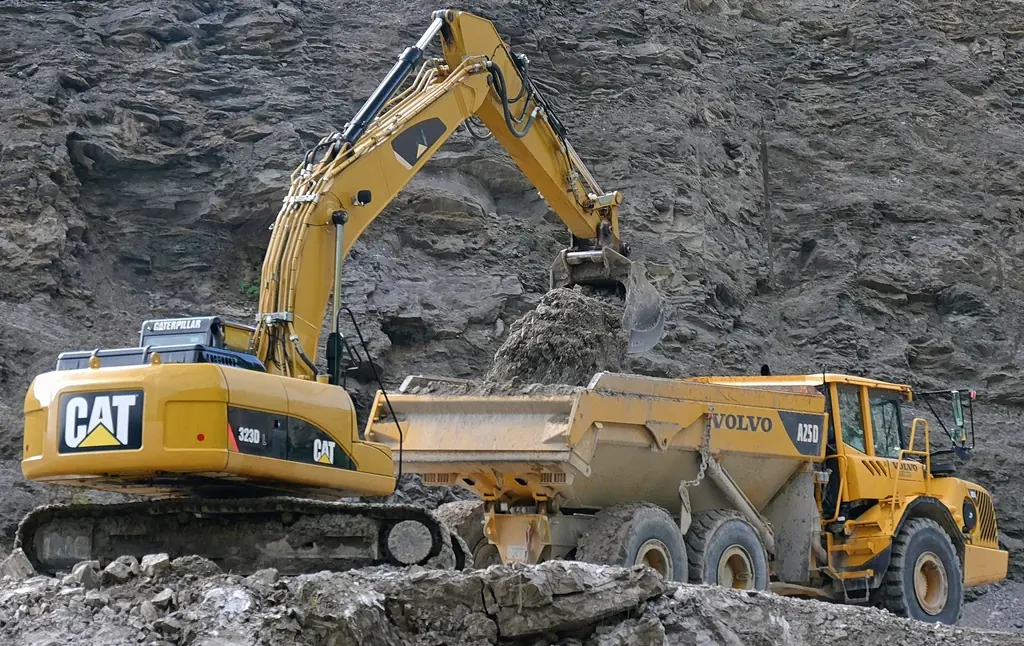
- Yellow goods: excavators, loaders, graders, dozers, skid steers and forklifts.
- Plant and machinery: manufacturing equipment, CNC machines, agricultural machinery, cranes and printing equipment.
- Medical and dental equipment: imaging, dental chairs, sterilisers and practice equipment.
- IT and office equipment: servers, hardware, point of sale systems and telephony.
- Fit-out: shop, cafe, clinic and office fit-outs, often under a lease or rental because the items have little resale value once installed.
New, used and private sale assets
Asset finance is available for new and used assets, bought from a dealer, at auction or from a private seller. Used and private sale purchases attract more checks: lenders commonly ask for an inspection or valuation, proof the seller owns the asset, and a payout letter if the seller still has finance on it. Many lenders also set a maximum age for the asset at the end of the loan term, which varies by asset type and lender.
PPSR checks and registration
The Personal Property Securities Register (PPSR) is the national online register of security interests in personal property such as vehicles and equipment. When your loan settles, the lender registers its security interest over the asset. Before you buy a used asset, a PPSR search shows whether someone else's lender already has a registered interest over it. The PPSR states that an online search costs $2 (as at November 2026), and that for business purchases you should search both the serial number, such as a VIN, and the seller's details. The PPSR is not a register of ownership, so a clear search does not prove the seller owns the asset.
What are the types of asset finance?
The main types of asset finance are the chattel mortgage, finance lease, operating lease, commercial hire purchase and rental agreement. They differ in who owns the asset during the term, how GST is handled and what happens at the end.
| Product | Who owns the asset | GST in general terms | Balance sheet | End of term |
|---|---|---|---|---|
| Chattel mortgage | You, from day one. The lender holds a mortgage over the asset | GST is in the purchase price. A GST-registered buyer generally claims the credit up front | Asset and loan are both recorded by your business | Pay the final instalment or balloon and the lender releases its security |
| Finance lease | The lender (lessor). You have use of the asset | GST is charged on each lease payment and on the residual if you buy the asset | Depends on the accounting standards your business reports under | Pay the residual and take ownership, refinance the residual, or return or trade the asset as the lease allows |
| Operating lease | The lender (lessor), which also carries the resale risk | GST is charged on each lease payment | Depends on the accounting standards your business reports under | Return the asset, extend the lease or upgrade |
| Commercial hire purchase | The lender, until the final instalment is paid | For agreements entered into on or after 1 July 2012, all components are subject to GST and the credit can generally be claimed up front | Asset and liability are generally recorded by your business | Ownership passes to you after the final payment |
| Rental | The rental company | GST is charged on each rental payment | Depends on the accounting standards your business reports under | Return, keep renting, upgrade, or buy if the agreement offers it |
The chattel mortgage is the most common structure for vehicles and equipment bought by GST-registered businesses, and the chattel mortgage guide covers ownership, GST timing and balloons in detail. For a side by side decision between the three ownership-style products, see the comparison of chattel mortgage vs finance lease vs hire purchase.
Sale and leaseback
Sale and leaseback is a way to release cash from equipment you already own: a lender buys the asset from your business and finances it back to you under a lease or loan. Lenders look at the asset's current market value, its age, proof that you own it outright and the reason you need the funds. It converts equity in equipment into working capital, but you take on repayments for an asset that was previously unencumbered, and a sale can have tax consequences that your accountant should review first.
How much can you borrow with asset finance?
Asset finance commonly covers up to the full purchase price of the asset for established businesses with clean credit, so a deposit is not always required. Newer businesses, weaker credit files, older assets and specialised equipment are the usual reasons a lender asks for a deposit, often in the range of 10 to 30 per cent as a general guide.
Three settings shape the repayment:
- Deposit or trade-in: reduces the amount financed and can improve the approval odds.
- Term: typically 1 to 5 years, and up to 7 years for long-life assets with some lenders. The term should not run longer than the asset's useful working life.
- Balloon or residual: a lump sum left to the end of the term, which lowers the regular repayment. You still owe that amount at the end and pay interest on it throughout.
The commercial loan calculator shows how the term and balloon change the regular repayment.
What drives asset finance interest rates?
Asset finance interest rates are driven by the strength of the borrower, the quality of the asset and the amount of evidence supplied. Rates are usually fixed for the term, so the repayment does not move, and they vary widely between lenders and over time. The main drivers are:
- time in business and how long the ABN and GST registration have been held
- credit history of the business and its directors
- whether the directors own property, which many lenders treat as a sign of stability even though it is not taken as security
- asset type, age and resale market
- deposit size and balloon size
- full financials versus low doc assessment
- dealer versus private sale.
Compare the total cost, not only the rate. Establishment fees, monthly account fees, the PPSR registration fee passed on by the lender, broker fees or commission and early payout charges all affect what the asset finance costs over its life.
How does asset finance work for trucks, machinery and cars?
Asset finance works the same way across asset classes, but lenders apply different policies to trucks, machinery and cars because their resale markets differ. Each has its own page:
- Truck finance covers prime movers, rigids and trailers, age limits, owner-drivers and new ABNs.
- Machinery finance covers yellow goods, agricultural and manufacturing equipment, seasonal repayments, auctions and imported or custom-built machines.
- Business car loans cover the business use test, the car limit for depreciation, luxury car tax and electric vehicles.
Can you get asset finance without full financials?
Asset finance is often available on a low doc basis, where the lender approves the loan without tax returns or full financial statements. As general practice, low doc asset finance is offered to ABN holders who have traded for a minimum period (commonly one to two years), are registered for GST, have a clear credit history and, with many lenders, own property. Loan size caps apply and vary by lender and asset.
Borrowers outside those settings, including new ABNs, can still be considered, usually with a deposit, a shorter term, a higher rate or supporting evidence such as bank statements or contracts. Where the business needs working capital as well as equipment, low doc business loans follow similar principles.
Documents lenders ask for
- ABN and GST registration details, and identification for directors or owners
- a supplier quote or tax invoice describing the asset, including serial number or VIN
- a statement of the directors' assets and liabilities
- for full doc applications: recent financial statements, tax returns and business activity statements
- for low doc applications: a declaration of income and sometimes business bank statements
- for private sales: proof of ownership, an inspection or valuation and any payout letter
- a certificate of currency for insurance before settlement.
How long does asset finance take to approve?
Asset finance for a standard vehicle or machine can be approved within a few business days once the lender has a complete application, and sometimes faster. Larger exposures, specialised assets, private sales and imported equipment take longer because of valuations and extra checks. No timeframe is guaranteed. The usual steps are:
- Choose the asset and get a written quote.
- Decide the structure: product type, term, deposit and balloon, ideally with your accountant.
- Submit the application and supporting documents.
- Receive credit approval, with any conditions.
- Sign the finance documents and arrange insurance.
- The lender pays the supplier, registers its interest on the PPSR, and you take delivery.
A commercial finance broker can place the application with a lender whose policy fits the asset and your trading history, which matters most for used, private sale or specialised equipment.
How is asset finance treated for tax?
Asset finance is treated for tax according to the product used, because the product decides who owns the asset and how GST is charged. In general terms:
- GST: a GST-registered business that buys an asset for business use can generally claim a credit for the GST in the price. Under a lease or rental, GST is charged on each payment and claimed as the payments are made.
- Depreciation: where your business is treated as the owner, it may be able to claim the asset's decline in value.
- Interest and payments: interest on a business loan and lease payments for business assets are generally deductible to the extent of business use.
Instant asset write-off: the ATO's instant asset write-off page, checked on 24 November 2026, lists a limit of $20,000 per asset for businesses with an aggregated turnover under $10 million that use the simplified depreciation rules, for assets first used or installed ready for use on or after 1 July 2023. Assets at or above the limit go into the small business pool. Limits and dates have changed often, so confirm the current position with your accountant before you buy.
Passenger cars have extra rules, including a car limit on depreciation. Tax outcomes depend on your structure, turnover and how the asset is used, so get advice from your accountant or registered tax agent before choosing a product.
What are the risks of asset finance?
The main risks of asset finance are owing more than the asset is worth, being locked into fixed repayments and losing the asset if the business cannot pay. Check these points before signing:
- Balloon risk: a large balloon on a fast-depreciating asset can leave a shortfall when you sell or trade it.
- Term mismatch: a term longer than the asset's working life means paying for equipment that no longer earns income.
- Early payout cost: fixed rate contracts usually charge a fee or part of the remaining interest if you pay out early.
- Personal guarantees: directors are commonly asked to guarantee the debt, so their personal assets are exposed if the sale of the asset does not clear the loan.
- Insurance and maintenance: you carry both for the whole term, even under a lease where the lender owns the asset.
Asset finance is not always the right tool. Short-term or working capital needs are usually better matched to business loans or a business line of credit, and urgent funding secured against property falls under private lending. When comparing asset finance quotes, line up the same term, balloon and fees so that the repayments are comparable.
Frequently asked questions
Is equipment finance the same as asset finance?
Yes. Equipment finance and asset finance describe the same group of products: loans, leases and hire purchase agreements secured by the asset being bought. Some lenders use equipment finance for machinery and technology and asset finance as the broader label that also covers vehicles, but the assessment, security and product types are the same.
Do you need a deposit for equipment loans?
Not always. Established businesses with clean credit can often finance the full purchase price of a standard asset. A deposit is more likely to be requested for a new ABN, an impaired credit file, an older asset or specialised equipment with a thin resale market. As a general guide, requested deposits fall between 10 and 30 per cent, and every lender sets its own policy.
What does an asset finance broker do?
An asset finance broker compares lender policies for your asset type, age and trading history, then prepares and lodges the application with a lender likely to accept it. The broker is usually paid a commission by the lender, a fee from you, or both, and should disclose this. A broker does not make the credit decision and cannot guarantee approval.
Can a new business get asset finance?
Yes, some lenders consider businesses with a new ABN, although the choice of lenders is narrower. Expect conditions such as a deposit, a shorter term, a lower maximum loan amount, a higher rate, or evidence of industry experience and forward contracts. Directors who own property or have a strong personal credit history are generally viewed more favourably.
What happens if I cannot make my asset finance repayments?
Contact the lender early, because varying the repayments is easier before arrears build up. If the default is not fixed, the lender can repossess and sell the asset under the contract and pursue the business and any guarantors for a shortfall. Business-purpose finance generally does not carry the hardship protections of consumer credit law, so read the default clauses before signing.
Can I pay out asset finance early?
Usually yes, but there is often a cost. Most asset finance has a fixed rate, and the contract sets out how the payout figure is calculated, which can include an early termination fee or a portion of the interest that would have been paid. Ask for the early payout method in writing before you sign, particularly if you expect to sell or upgrade the asset mid-term.
Does asset finance show on a PPSR search?
Yes. The lender registers its security interest over the financed asset on the Personal Property Securities Register, and the registration appears when someone searches the serial number or the business's details. The lender should remove the registration once the finance is paid out. Check that this has been done before you sell the asset.
Sources
Written by
Asset and business finance writer
Callum writes the asset finance and business loan guides. He focuses on the parts of a facility that cost borrowers money after settlement: balloons, fees, guarantees and how different products are treated for GST. He checks tax and PPSR points against ATO and government sources before they go into a guide.
Last reviewed 24 November 2026. See how we research and check our guides on the editorial team page.
This page is general information, not credit, tax or financial advice. Figures describe typical market practice and are not quotes. See our disclaimer.