Key facts
- Security
- The machine, with the lender's interest registered on the PPSR
- Typical term
- 2 to 5 years, up to 7 for long-life machines
- Deposit
- Often nil on primary assets, more likely on specialised plant
- Repayments
- Monthly, or seasonal structures for agriculture
- Custom builds
- Progress payments, converting to a term loan at delivery
What is machinery finance?
Machinery finance is a business loan or lease used to buy plant and equipment, secured by the machine itself. It is one branch of asset finance and covers everything from a single skid steer to a full production line. The lender relies on the machine as security, so its resale value shapes the approval as much as your financials do.
Machinery finance suits contractors, farmers, manufacturers and workshops that need equipment to earn income and prefer to pay for it over its working life. It is most often written as a chattel mortgage, with leases and rental used for equipment that dates quickly. As business-purpose credit, it generally sits outside consumer credit law.
What machinery can be financed?
Machinery finance is available for most identifiable equipment with a serial number and a resale market. The main categories are:
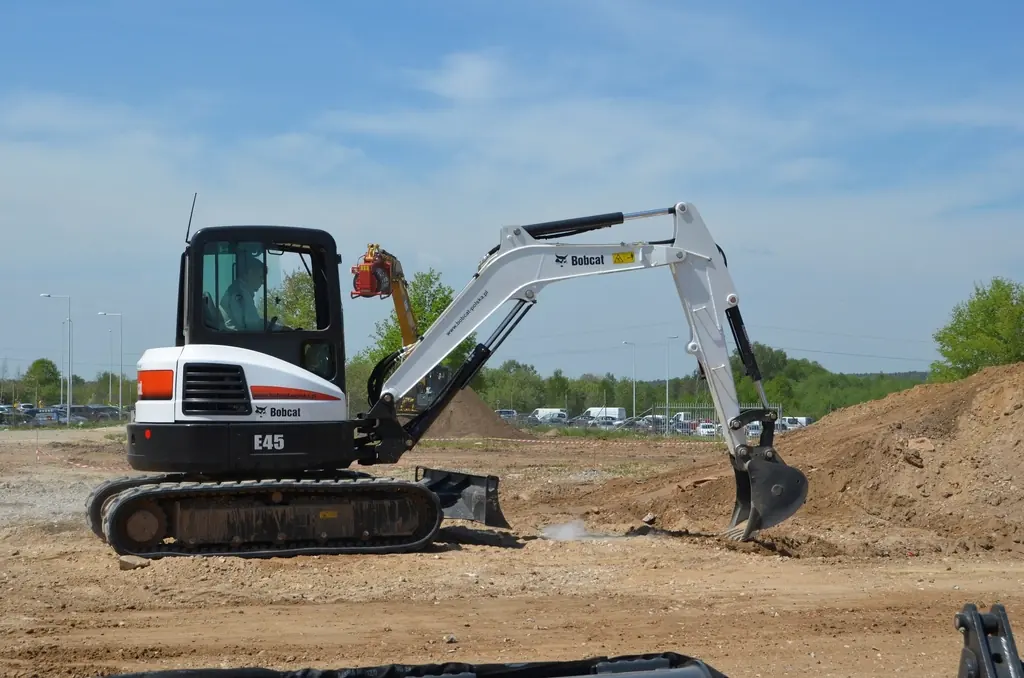
- Yellow goods: excavators, wheel loaders, backhoes, graders, dozers, rollers, skid steers and telehandlers.
- Agricultural machinery: tractors, headers, sprayers, seeders, balers and irrigation equipment.
- Manufacturing equipment: CNC machining centres, lathes, laser cutters, press brakes, injection moulders and packaging lines.
- Materials handling: forklifts, cranes, conveyors and racking systems.
- Other plant: generators, compressors, crushing and screening plant, and workshop equipment.
Attachments such as buckets, GPS guidance and tooling can usually be included when they appear on the same invoice. Road-registered vehicles that carry the machinery are assessed under truck finance.
How does resale value affect machinery finance approval?
Resale value affects machinery finance approval because the lender must be able to sell the machine for a predictable price if the loan fails. Lenders sort equipment into broad classes, often called primary, secondary and specialised (or tertiary) assets. The class determines how much is lent, over what term and with how much supporting evidence.
| Asset class | Examples | Resale market | Typical lender approach |
|---|---|---|---|
| Primary | Excavators, loaders, tractors and forklifts from major brands | Deep and national, with regular auction sales | Often up to the full price, longer terms, balloons allowed, low doc commonly available |
| Secondary | CNC machines, laser cutters, printing presses, crushing plant | Narrower, with buyers in one industry | Deposit more likely, shorter terms, smaller or no balloon, financials often requested |
| Specialised | Custom-built lines, fixed plant, software-dependent or installed equipment | Thin, and expensive to remove and relocate | Fewer lenders, larger deposit or additional security, assessed mainly on the strength of the business |
These are general market practices, and each lender draws its own lines. A strong, long-established borrower can finance specialised equipment on good terms, while a new business may be asked for a deposit even on primary assets. Brand, hours of use and service history move a machine up or down within its class.
How much can you borrow and over what term?
Machinery finance commonly covers up to the full purchase price of primary equipment for established businesses, with deposits of around 10 to 30 per cent more likely for secondary and specialised assets, as a general guide. Terms typically run from 2 to 5 years, and some lenders extend to 7 years for long-life machines. The term should be no longer than the period the machine will be productive.
A balloon lowers the regular repayment by leaving part of the debt to the end of the term. It works best on equipment that holds its value, and lenders limit or refuse balloons on assets that are hard to resell. Rates are usually fixed and depend on time in business, credit history, asset class, age and whether the application is full doc or low doc. The comparison of chattel mortgage, finance lease and hire purchase explains how each product changes ownership and GST.
Seasonal repayments for agriculture
Seasonal repayment structures let a farming business match machinery finance repayments to when income arrives. Instead of equal monthly instalments, the contract can be set with annual, half-yearly or quarterly payments timed after harvest, shearing or livestock sales. Some lenders also allow irregular schedules with larger payments in strong months and smaller ones in the off season.
The interest still accrues between payments, so a seasonal structure usually costs more in total than monthly repayments on the same loan. Lenders generally want to see past seasons' financials or a cash flow forecast showing that each payment falls after the income that funds it. A poor season is the main risk: one missed annual payment is a large arrear, so keep a buffer or a working capital facility such as a business line of credit.
Can you finance used machinery or an auction purchase?
Used machinery and auction purchases can be financed, subject to the machine's age, hours and condition. Many lenders set a maximum age at the end of the term, which is generous for primary yellow goods and agricultural equipment and tighter for electronics-heavy or specialised machines. Expect requests for:
- a tax invoice or sale contract with the serial number, year of manufacture and hours
- photos and a condition report or independent valuation
- proof of the seller's ownership, and a payout letter if the machine is still under finance
- a search of the Personal Property Securities Register (PPSR) against the serial number where one is recorded and against the seller.
The seller search matters for machinery. The PPSR recommends that business buyers search by the seller's details as well as by serial number, and it notes that the register does not prove ownership. Each online search costs $2 (as at November 2026).
At auction, payment is usually due within days of the hammer falling. Arrange a pre-approval with a set limit before bidding, and allow for buyer's premium, GST and transport in that limit. Private sales take longer than dealer sales because the lender verifies the seller and pays any existing financier directly.
How are imported and custom-built machines financed?
Imported and custom-built machines are financed with staged funding, because the supplier wants deposits and milestone payments before the machine exists as security. Lenders handle this in a few ways, and not all lenders offer them:
- Progress payment facility: the lender pays the deposit and each milestone invoice as it falls due. You generally pay interest only on the amount drawn during the build.
- Conversion at delivery: once the machine is delivered, installed and commissioned, the drawn balance converts to a standard term loan or lease with regular repayments.
- Reimbursement: if you paid the deposit from your own cash, some lenders refund it at settlement, usually within a set time limit and with proof of payment.
During the build the lender has little or no security, so progress payments are assessed mainly on the financial strength of your business and the reputation of the manufacturer. Financial statements are normally required, and additional security or a director's guarantee may be requested.
For overseas purchases, check who carries the exchange rate risk between order and final payment, and whether the lender will pay the supplier in foreign currency. Budget for freight, insurance, customs costs, installation and commissioning, and ask which of these can be included in the amount financed. Tax on imported equipment is a question for your accountant or customs broker before you order.
What should you check before applying for machinery finance?
Before applying for machinery finance, check that the term, repayment pattern and end-of-term obligation match how the machine will earn income. The common traps are:
- Utilisation: a machine that works fewer hours than planned still carries the full repayment.
- Technology risk: equipment that dates quickly may be better leased or rented than owned.
- Balloon shortfall: a balloon larger than the machine's future value leaves a gap to fund.
- Guarantees and early payout: directors usually guarantee the debt, and fixed rate contracts charge for early exit.
- Tax assumptions: GST credits, depreciation and any instant asset write-off depend on your circumstances and the current ATO rules, so confirm them with your accountant before signing.
A commercial finance broker can identify which lenders accept the asset class, age and repayment structure you need. If you are also buying the shed or factory the machinery sits in, that purchase is funded separately through commercial property loans. To discuss a specific machine, use the enquiry form.
Frequently asked questions
What does a machinery finance broker do?
A machinery finance broker identifies lenders whose policy fits your machine's type, age and resale profile, then packages the application with the invoice, valuations and financial information the lender needs. This is most useful for used, specialised or imported equipment, where lender appetite differs widely. The broker should disclose how they are paid and cannot guarantee an approval.
Can I get low doc machinery finance?
Often, yes, for primary assets. As general practice, lenders offer low doc approval to businesses with an established ABN and GST registration, clean credit and frequently property ownership, up to a set loan size. Secondary and specialised machinery is more likely to need financial statements, because the lender is relying more on the business than on the resale value of the machine.
What is the difference between primary and secondary assets?
Primary assets are common machines with an active national resale market, such as excavators, tractors and forklifts. Secondary assets, such as CNC machines or printing presses, sell to a narrower group of buyers. Lenders generally advance more, for longer and with less paperwork on primary assets, and ask for deposits or shorter terms on secondary and specialised equipment.
Can I finance machinery from a private seller?
Yes. Many lenders fund private sales, with extra checks to protect both you and the lender. Expect to supply the seller's identification and proof of ownership, a sale agreement with the serial number, photos or a valuation, and a payout letter if finance is owing. The lender normally pays the seller, or the seller's financier, directly at settlement.
Should I lease or buy machinery?
Buying under a loan suits long-life machines you intend to keep, because you own the asset and its resale value. Leasing or renting suits equipment that dates quickly or is needed for a fixed contract, since you can return or upgrade it. The tax and accounting results differ between the two, so compare the after-tax cost with your accountant.
Can I refinance machinery I already own?
Yes. A sale and leaseback, or a loan secured against machinery you own outright, can release cash for working capital or a deposit on new equipment. Lenders will want proof of ownership, a current valuation and a clear PPSR search. The amount available depends on the machine's age and market value, and you take on new repayments for an asset that was unencumbered.
Sources
Written by
Asset and business finance writer
Callum writes the asset finance and business loan guides. He focuses on the parts of a facility that cost borrowers money after settlement: balloons, fees, guarantees and how different products are treated for GST. He checks tax and PPSR points against ATO and government sources before they go into a guide.
Last reviewed 24 November 2026. See how we research and check our guides on the editorial team page.
This page is general information, not credit, tax or financial advice. Figures describe typical market practice and are not quotes. See our disclaimer.